Pages

Showing posts with label Pearl-bordered Fritillary. Show all posts

Tuesday, 27 April 2021

Pilgrimage to Rewell Wood

 This is a bit of a resurrection job as I published this blog several days ago and subsequently spotted an error. I corrected the error pushed the update button and lo and behold the lot disappeared into cyberspace, never to be seen again. Of course no back up so I have to recreate what was after all a small blog.

About this time of year for the past seven years we have made what has become a pilgrimage to Rewell Wood in West Sussex. Primarily to pay homage to that most scarce and beautiful of butterflies - the Pearl-bordered Fritillary, Boloria euphrosyne. I believe the attraction is that this is a butterfly that was "hanging on" when we first started but now, locally, is on the up.

We usually park up in the layby at Fairmile Bottom and take the walk over the hill, of late I am sure the hill is getting steeper. On the way there is great anticipation and discussion, will we find it, who will spot it first? Questions that almost distract you from the sea of blue created by the Bluebells that carpet the woodland floor. This year the season seems a tad late and the blue vista is just emerging.

Arriving at the favoured ride it wasn't long before Martin spotted our first specimen, a male on a mission, not stopping, careering along the ride in search of a mate. Times past there would have been the sight of two elderly butterfliers chasing after each specimen, hell bent on getting the perfect shot. Things are a little more sedate nowadays, we have learned patience and the reward is the satisfaction of gaining some not too shabby record shots. We hung around for a couple of hours and in that time we probably had a dozen butterflies, mostly males, some of which were freshly emerged and preferring to bask in the warm sunshine. Orange Tip, Brimstone, Speckled Wood and Peacock were the supporting cast.


I managed to record a Gooden's Nomad Bee, Nomada goodiana, a wasp mimic that is a kleptoparasite. These are organisms that take over the nest or nest cell of the target host species. The offspring then feed off the food supplies intended for that of the host.


In contrast to the blue of the Bluebells the Common Dog Violets, Viola riviniana and Bugle, Ajuga reptans provide a striking purple hue to the areas that have been recently coppiced. Both plants are important to the PbF, the violet as a larval host plant and the Bugle as a common source of nectar. I couldn't resist recording the violet as it is the county flower of God's Own County - Lincolnshire.


Taken on a previous visit

Ditto


Sunday, 8 July 2018

Butterflying in the Alpes-Maritime, Col de La Lombarde

Day 2 and the plan consisted of a trip to our first Col with the target being Cynthias Fritillary and possibly a scarce Pyrgus or two. Of course the journey up and down can be broken with frequent stops at riverside meadows and small but well populated sites adjacent to the road.

Last year our first roadside stop was memorable as I was totally overwhelmed by the number of butterflies present, I learned pretty rapidly that in a target rich environment you shouldn't attempt to photograph everything as all you get is a load of poor photos. Better to concentrate on a single quarrry and when quality has been achieved, move on to the next species.  So, when we stopped at the same location this year I was ready for action, unfortunately the late spring meant that the numbers were disappointing.

Still, it was nice to find a pair of Silver-studded Blues engaged in making more Silver-studded Blues, an extremely obliging Niobe Fritillary and a worn Pearl-bordered Fritillary. Every cloud as they say - it was nice to find a great stand of Martagon Lilies, last year they were well past their sell by date.


Silver-studded Blues


Niobe Fritillary

Pearl-bordered Fritillary

Martagon Lily


On up to the Col at an altitude on 2,350 metres or 7,710 feet in real money. Again butterflies were not numerous and every time a member of the group found a Cynthias Fritillary I seemed to be the furthest away, resulting in fleeting glimpses rather than photographic records. I consoled myself with a fairly fresh Grison's Fritillary, a worn high altitude Marsh Fritillary and some nice Vanilla Orchids. At first I thought they were Red Vanilla, Nigritella rubra but l now consider them to be Cornelias Vanilla Orchid, Nigritella corneliana. Happy to be corrected.


Grison's Fritillary


A bonus - a high altitude Marsh Fritillary on a Vanilla Orchid!


Nice to see Stemless Gentians, Gentiana acaulis in bloom, another species that had long gone last year. Sadly most of the blooms were a bit battered by the weather.


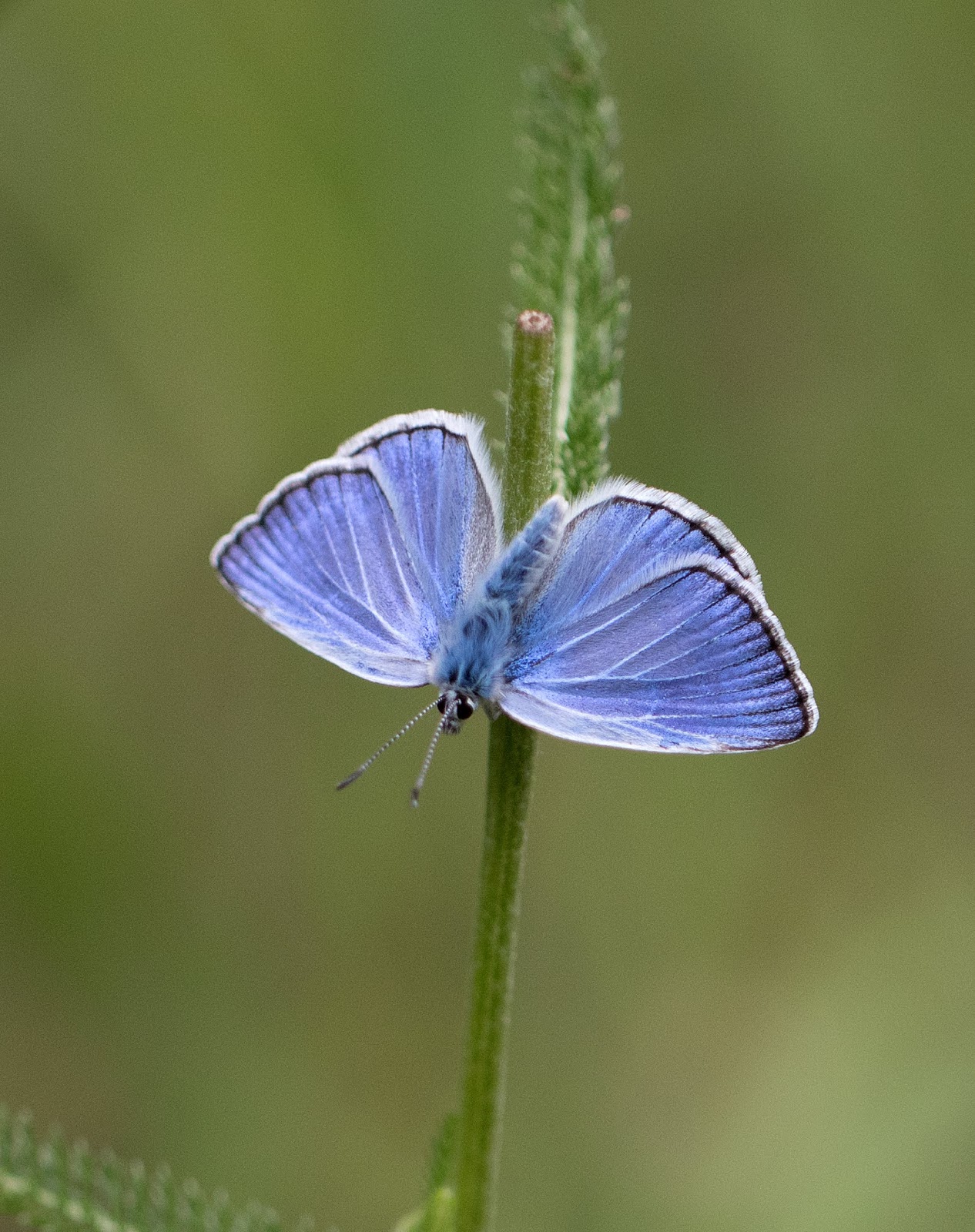
Then a drop down the valley to find Geranium Argus and a break for lunch. The sun disappeared and I struggled to find a single specimen, of course as soon as the sun re-appeared they emerged in good numbers. Added bonus was an Amanda's Blue, the Mazarine Blue that I tracked for some time was spooked just as I was about to operate the shutter.


Geranium Argus


Amanda's Blue

Amanda's Blue


Amanda's Blue

Another roadside stop above a fast flowing river, the grassy banks either side were alive with butterflies but it was a moth that stole the show, a Nine Spotted Moth or Yellow Belted Burnet, Amata phegea

Turquoise Blue

Turquoise Blue


Yellow Belted Burnet

Yellow Belted Burnet

Yellow Belted Burnet

Finally the ubiquitous Black-veined White and an obliging Heath Fritillary

Black-veined White


Heath Fritillary


Tuesday, 8 May 2018

Two Sussex Beauties

The time when the accent switches from birds to butterflies fast approaches. Right now we are on the cusp, torn between dashing to the coast to watch the passage of seabirds or to venture into the Sussex countryside in search of freshly emerged butterflies. Today, with such fine weather and high temperatures predicted, the butterflies won. We started, rather later than usual, at Kithurst meadow, the closest site for Duke of Burgundy and usually reliable. Two earlier visits had resulted in nothing being found but with high temperatures over the Bank Holiday weekend there was a good chance that they would be on the wing. And so it proved, as we parked a returning butterfly enthusiast confirmed that they were about and we didn't hang about as we made our way down the hill.


With one target in the bag we decided to give Rewell Wood the once over for some fresh Pearl-bordered Fritillaries. Last week when we visited we had encountered some serious mud where heavy plant had churned up the tracks. The reasoning was that we should approach from Fairmile Bottom, much drier tracks that way. Only a third of the way up the hill I was beginning to regret that decision, perhaps the other way in was muddy but at least it was flat. Still, as we spotted our first PbF all the pain disappeared and we set about trying to get reasonable records of some fairly fast flying subjects. Finally one specimen posed for us and we were happy. The walk back to the car was a doddle, virtually down hill all the way.


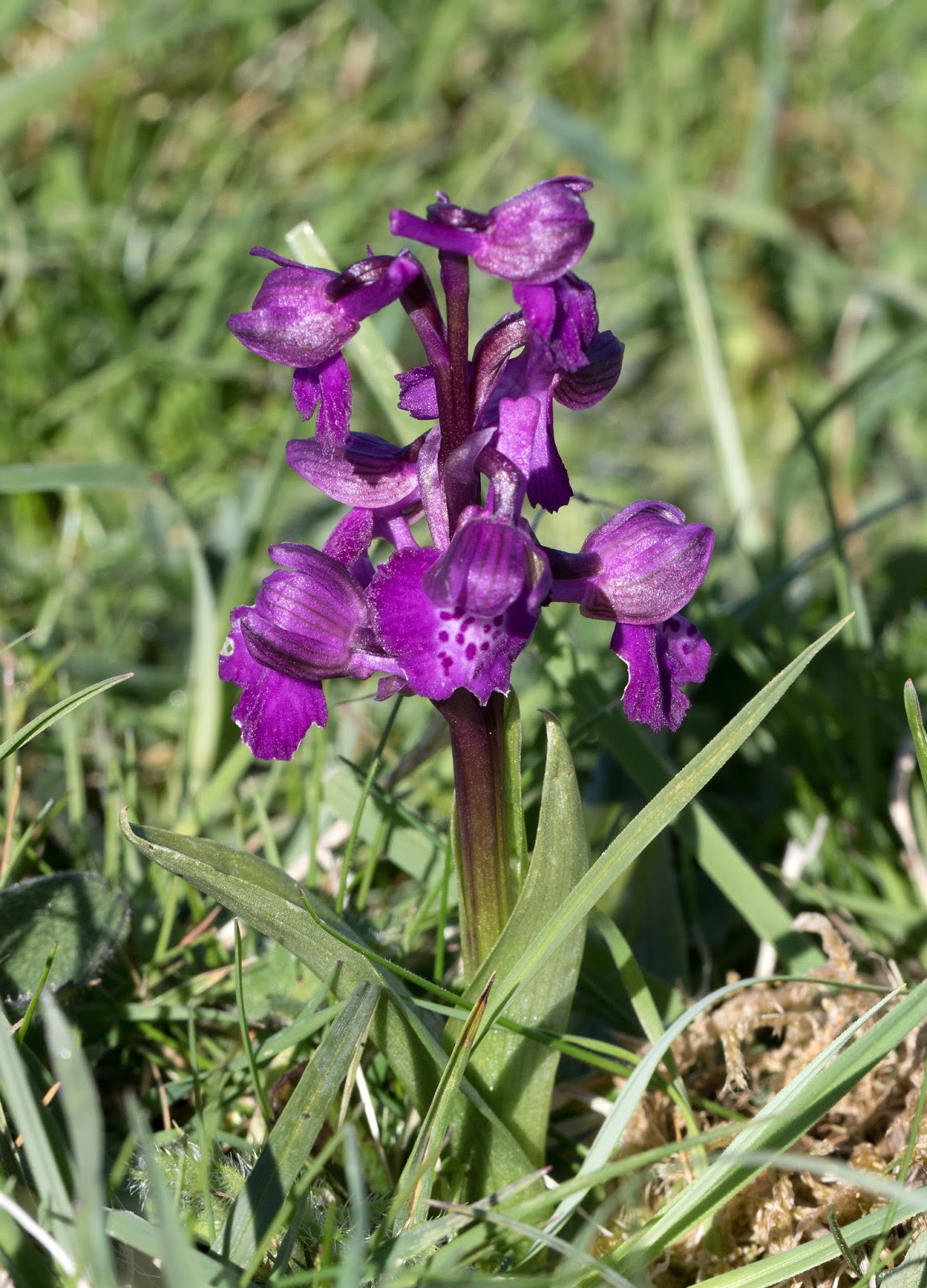
Earlier butterfly forays had given me a Grizzled Skipper at Mill Hill though precious little else was flying in the cool south westerly breeze. At Anchor Bottom I recorded the first blooms of Green-winged Orchid.