Pages

Showing posts with label Autumn lady's tresses. Show all posts

Friday, 24 August 2018

Autumn Lady's Tresses

Autumn Lady's Tresses are normally the last orchid of the season for me and a visit to Anchor Bottom in late August usually brings a reward. It's nice to get them early so that the blooms are fresh as It doesn't take long before the lowest flowers are going brown. So Martin and I paid a visit nearly a fortnight ago and we were way too early - not a sign of a single one. Also, the earth was parched and the grassy slopes had a crunchy feeling underfoot. I wasn't confident that it would be a good year for them. How wrong can you be. I returned today to find hundreds, probably thousands, in bloom. Stretching all the way from the gate at Five Ways down to Dacre Gardens. The recent rains had turned Anchor Bottom green again and the orchids had responded,


Living up to its name  - Spiranthes spiralis


Huge numbers this year


Plenty of butterflies on the wing, the electric blue of the Adonis Blues still in evidence. A single Chalk Hill Blue was trying to interrupt a pair of ABs that were ensuring the colony would thrive next year. Small Heaths, Meadow Browns and Whites made up the supporting cast.


Friday, 1 September 2017

Adonis Blue

Today was probably the last butterfly day, there may be some late Clouded Yellows to come, but I have seen precious few up to now.  This time of year Anchor Bottom is worth a visit. A typical downland combe, running east to west, so it has a south facing slope that is baked by sunshine. Today was no exception and there were a host of second brood Adonis Blues on the wing.  A supporting cast of Meadow Browns and just singletons of Comma and Clouded Yellow.


Job done then - time to take it easy.


An added bonus is that there is a huge population of Autumn Lady's Tresses present, although this year I had left my visit a little on the late side and most of the blooms were just about done.


Still a few nectar sources available 

Viper's Bugloss

Carline Thistle
Round-headed Rampion


A few from earlier in the week, a walk round the fields of Honer Farm at Pagham produced very little. Whilst trying to photograph Redstarts and Spotted Flycatchers  I was treated to a low fly-by of a very vociferous Buzzard. Every year when there are some close Wheatears on the North Wall I say to myself -"Got plenty of Wheatear photos - don't need any more"  then proceed to snap away at some really obliging subjects.


Common Field Grasshopper
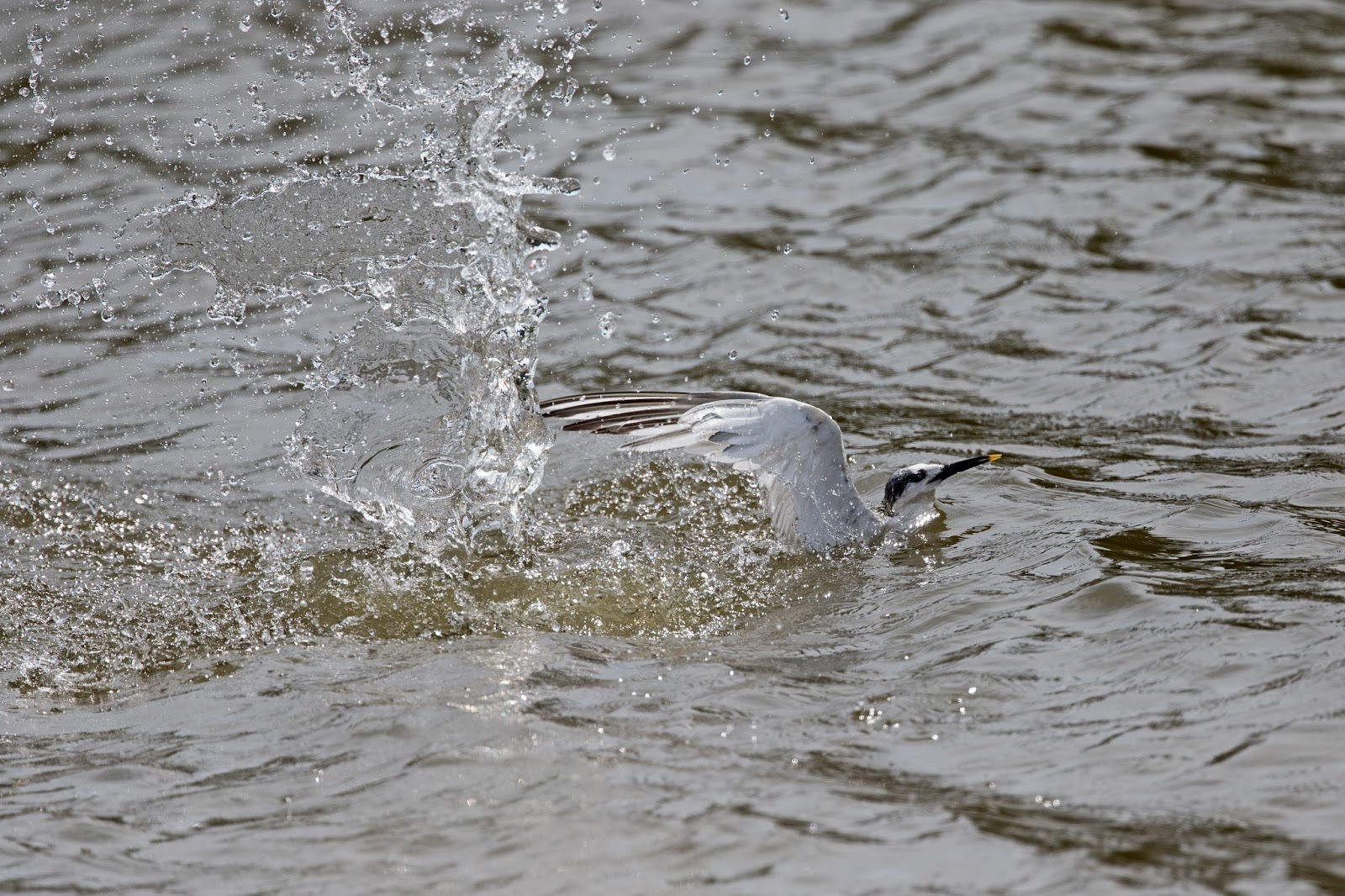
This Sandwich Tern managed to catch a fish every time when I failed to get focus - the Law of Sod made sure that when I got a clean shot he missed.


Thursday, 12 September 2013

Autumn Lady's Tresses, Anchor Bottom

Following three days of really enjoyable birding I managed to find enough energy to get out and about to Anchor Bottom. I have been trying to get there to record the Autumn  Lady's Tresses and feared that I would be too late. Not quite, although some of the blooms had gone over, there remained masses just coming into full flower. On the northern - south facing, slope of Anchor Bottom there are hundreds, probably thousands, of specimens between the entrance at Dacre Gardens and the old fence line.


Some are tall......

.....and some are small.


On our recent travels Martin and I had come across a Robin's Pincushion. However, today I found a really magnificent set of specimens, well worth photographing. The rose bedeguar gall, Robin's Pincushion gall or moss gall develops as a chemically induced distortion of an unopened leaf axillary or terminal bud, usually on the Field Rose or Dog Rose, caused by the parthenogenetic hymenopteran Gall Wasp, Diplolepis rosae.


A ginormous cluster!!
 
Butterflies are plentiful, particularly blues, but there are still Clouded Yellows to be found, though not willing to settle. Most specimens are now well past their "sell by" date.
Now that's what I call "well worn"
The thistle heads that were the source of food for the butterflies are now providing seed to ever increasing numbers of Goldfinches.


The season of mellow fruitfulness is upon us and the first signs of the "fungus fest" are showing, nothing like a good cowpat to provide the sustenance. This is possibly a Snowy Inkcap, Coprinopsis nivea  which prefers the weathered dung of herbivores.


And finally.............Eyebright, Euphrasia officinalis