Pages

Friday, 21 February 2014

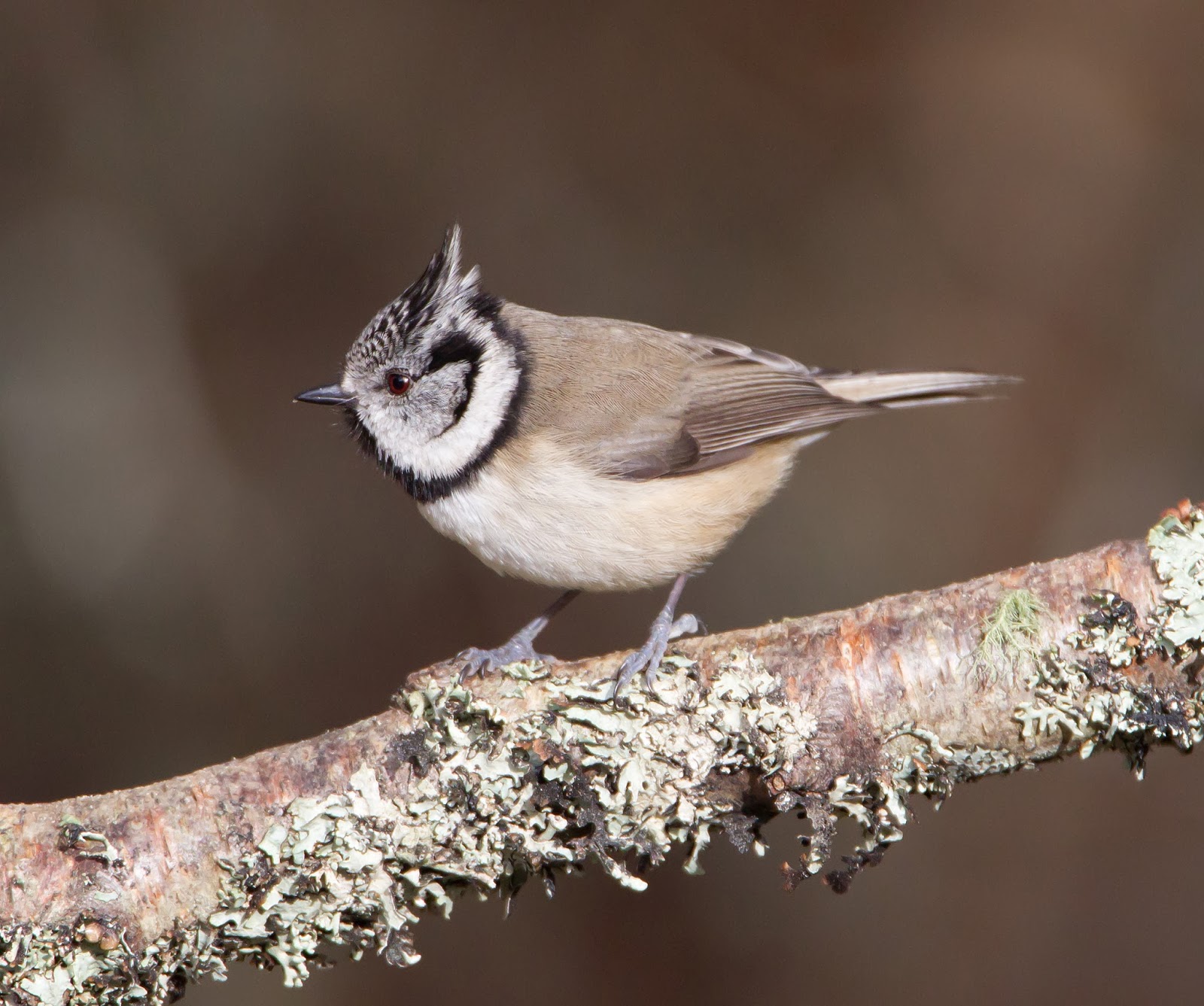
Crested Tits, Loch Garten

Loch Garten and the Findhorn Valley


Day 2 dawned with leaden skies and more strong winds, not ideal weather for being out in the open or for that matter photography. I decided to go to Loch Garten Osprey Centre, the visitor centre is closed during the winter months but staff maintain the feeders that attract masses of Coal Tits a few Crested Tits and the occasional Red Squirrel. The centre has a webcam which can be seen here.

The real action occurs in the car park where keen photographers have set up their own feeders and perches. Over the years the birds have come to expect anyone approaching to have food with them and as a consequence will actually land on the feed as it is strategically placed in the foliage. I took plenty of peanuts and suet blocks with me but the magic ingredient is peanut butter, take the lid off and it is likely that Coal Tits will sit on the rim within seconds. A word of advice is that it is probably best to use the salt free peanut butter that is available from bird food suppliers.

Photographing Cresties is a somewhat difficult pastime, in winter the birds are caching food and therefore make rapid visits to the feeders, grab a morsel and head off to hide the prize away without being considerate enough to perch and pose for the camera.


When everyone had disappeared this chap came out to mop up the peanuts next to my car. I watched him caching, not in a hole in a tree but in the tussocks of marsh grass some twenty feet from where we had all been standing.

Bit of a mouthful.

Of course there is a full supporting cast of Coal, Blue and Great Tits, Great Spotted Woodpeckers, Chaffinches and Tree Creepers.


 In the afternoon rain set in and I decided to use the time to investigate the Findhorn Valley, in the hope of at least seeing some raptors. Conditions at the car park at the head of the valley were truly miserable, driving rain and sleet in a howling gale. Upside was that I managed to see Ravens, Buzzards and a single Sparrowhawk. Searching the far hillside gave ten Mountain Hares running riot, at least they would be easy to locate on a return visit.

I dropped back down the valley to the wooden footbridge where I located a couple of Dippers on the stones at the entrance to the burn that runs into the main river. All  the DIppers that I found were easily spooked, I guess that the high water levels have covered their favourite perches.

Rather than give up I took the Farr road, desperate to find any birds. The Farr road is not for the faint-hearted but its remoteness normally guarantees a return - not today - just a few flighty Red Grouse. Finally I conceded and returned to the hotel to sort out the Crestie photographs.

Thursday, 20 February 2014

Eider and Long-tailed Ducks, Burghead

The prime reason for my visit to Scotland was to catch up with some of the sea ducks off the Moray coast, in  rough weather the Eiders and Long-tailed Ducks take shelter in the small harbours dotted along the coast giving superb opportunities for photography. Of course plans are made flexible and I just had to incorporate Crested Tit, Capercaillie and Dipper.  This was again modified to take in a couple of our furry friends - the Red Squirrels and Mountain Hares that are resident in the Cairngorms.

So with a planned absence of ten nights and a target list of 26 species I set off towards bonnie Scotland. The endless miles of motorway to Carlisle, my planned overnight stop, were interspersed with occasional bird sightings. Stokenchurch cutting on the M40 gave great views of a least 20 Red Kites and several Buzzards, just after Wigan I was dive bombed by a Sparrowhawk, straight across the bonnet of the car. The sun eventually came through the overcast grey skies and I mused whether to have a trip list, a Scottish list or both.

After a really comfortable night I set off for Musselburgh on the Lothian coast, having calculated that the detour would be worth a life tick, as the Surf Scoter has been inhabiting the estuary of the River Esk for several weeks. I chose the scenic route through the Pentland Hills which affords spectacular views, unfortunately the weather gods had decreed thick mist for the whole journey. No birding from the driving seat on this journey, utmost concentration on the road but traffic in both directions was extremely light. Just after Romanno Bridge I spotted a huge flock of Greylags so large that the field at the bottom of the valley was totally grey, I don't think I have seen so many grey geese at one time. As I descended towards Edinburgh I could see a crack of light in the gloom and approaching the coast things brightened up considerably, unfortunately not enough for any real photography. As I parked next to the river in Goose Green Place I was greeted by a small flock of Goldeneye cruising up and down the river, the males doing their fantastic neck bending and bill pointing display. Setting up the scope I could see rafts of Eiders, Long-tailed Ducks, Common and Velvet Scoters, Bar-tailed Godwit and many other birds but no Surf Scoter. I was reluctant to venture further down the sea wall as leaving the car, which was loaded with all my gear, was not really an option so after a while  relocated to the viewpoint at Prestonpans where I found similar birds augmented with a host of Slavonian Grebes and Shags. A quick visit to Ferny Ness, where birding from the car is easy, gave a similar list of species. Then on to Fenton Barns, a field of rape occupied by a fairly large mixed herd of Mute and Whooper Swans and a surprise covey of Grey Partridges.


Whooper family enjoying the rape.

Doesn't time fly when you are enjoying yourself? My allotted 3 hours had rapidly disappeared and it was time to navigate the Edinburgh City Bypass and the Forth Road Bridge. I could have had more time but I wanted to reach Grantown-on-Spey in the daylight

Day One - Alturlie, Loch Flemington and Burghead.

I started my exploration of the Moray Firth at Alturlie Point, where I expected to find rafts of sea birds similar to those at Musselburgh, not today, scattered flocks of Eider in the distance but nothing at close range. The weather was superb, warm sunshine and light winds, a situation that wasn't to last. Four hours after the view of the Kessock bridge was taken a howling gale was blowing along the Firth.


Kessock Bridge, Inverness - what's the white stuff in the distance??


Loch Flemington lies just inland from the coast and, as I was passing on my way to Nairn Beach, I decided to drop in to see the long staying American Coot. In fact to tell the truth I had done a bit of research and the info from John and Mick, who had been up a couple of weeks before, was spot on. As I parked in the lay-by another birder, Tim Cowley, kindly got me on to the bird. I had stupidly left my books and notes in the boot of the car and as I was reluctant to spook the bird, Tim kindly provided identifying features, thanks Tim very grateful.


So my first day commenced with a Mega life tick, feeling satisfied I made my way to Nairn. By now a full onshore gale was developing, Nairn was quiet so I made it hotfoot to Burghead. This little fishing harbour was made "famous" by Chris Packham on Winterwatch and since has become a weekend mecca for bird photographers, much to the chagrin of the local birders, who previously had this little gem to themselves.

Burghead is another venue where you can use the car as a hide, parking on the quayside allows close views of the birds. As I arrived I could see a flock of white dots at the far end of the harbour, large breakers were coming over the harbour wall and ducks were happy to find shelter.

Sheltering Eiders

The Eiders were joined by a dozen or more Long-tailed Ducks which were in full winter plumage, everything was quiet and serene until several Grey Seals arrived and the birds became spooked. A pattern developed, as fishing boats came into the harbour they were followed by the seals, hoping for a discarded fish or two and the birds decamped to the outer entrance until the seals disappeared. Unfortunately the Eiders were not left in peace, they continued feeding on crabs within the harbour but were plagued by Gulls which waited within the flock and pounced upon any individual that surfaced with a catch. Of the reported juvenile Great Northern Diver no sign - but of course that meant a return visit.


By now the car was shaking in the wind and covered with salt spray, time to leave, so I headed inland to recce other venues. Finding birds was difficult in the strong winds. On the Forres to Grantown road I expected to find Red Grouse, just two made momentary appearances. Broomhill Bridge is a racing certainty for Dippers, not at the moment, not a rock in sight on a very swollen river, heavy rain and snow melt putting the flow over the banks. Before I came up there had been heavy snow and this was evident on the tops, making the landscape very picturesque.


River Spey from Broomhill Bridge - somewhat high.

Plenty of snow on the tops.


Broomhill Station on the Strathspey Railway - known to TV viewers as "Glenbogle"

Monday, 10 February 2014

Kumlien's Gull

A decision to revisit the Kumlien's Gull looked to be a poor one as we arrived at the East Beach Littlehampton. The rain was bucketing down and where there had been hundreds of gulls feeding on the beach yesterday, just a handful were present as the tide ebbed. However things brightened up, first a fly by of the adult Glaucous Gull, albeit just a fleeting glance but at least encouraging. Frantic signalling from the birders on the other side of the river had us jumping in the car and heading for the West Beach car park - you have guessed it - when we arrived the bird had done a bunk. Owen Mitchell promised me that if we remained at the river mouth the gull would show up. Sure enough about half an hour later the bird was spotted by sharp eyed Paul and the keen birding photographers had a field day. Finally the bird disappeared further down the river mouth and having expended lots of pixels we retired. Nice to meet Paul and Trevor, who has managed to cling on to the beach at Pagham despite all the recent violent storms.


A band of notable birders on the wrong side of the river but I bet they got good views later on.


 We then decided to visit Beeding Brooks to locate an owl or two. Dropped in to Houghton bridge but no Bewick's were about, just two Mute Swans. The trek from King's Barn Lane to White Bridge was a bit hairy as the mud is horrendous. It was all worth it as just after 1630 we were rewarded with two Barn Owls and a single Short-eared Owl, two much appreciated year ticks.

Sunday, 9 February 2014

Sunday Twitch

It's a bit of a rarity for me - birding on a Sunday. However, an invitation to twitch the Kumlien's Gull on Littlehampton beach couldn't be turned down. Actually the bird was finally seen on the golf course and at a fair distance. A bit like searching for the proverbial needle but with the help of other birders I managed to get on it, after the distraction of an adult Glaucous Gull putting in an appearance.

It's in there somewhere
Adult Glaucous

Heads up!
Approaching golfer flushes the bird


After a half an hour of scanning every gull on the west beach we opted for home and a cup of tea. Of course about half an hour after we left the bird relocated to the east beach and was easily seen.