Pages

Friday, 10 July 2015

Large Heath

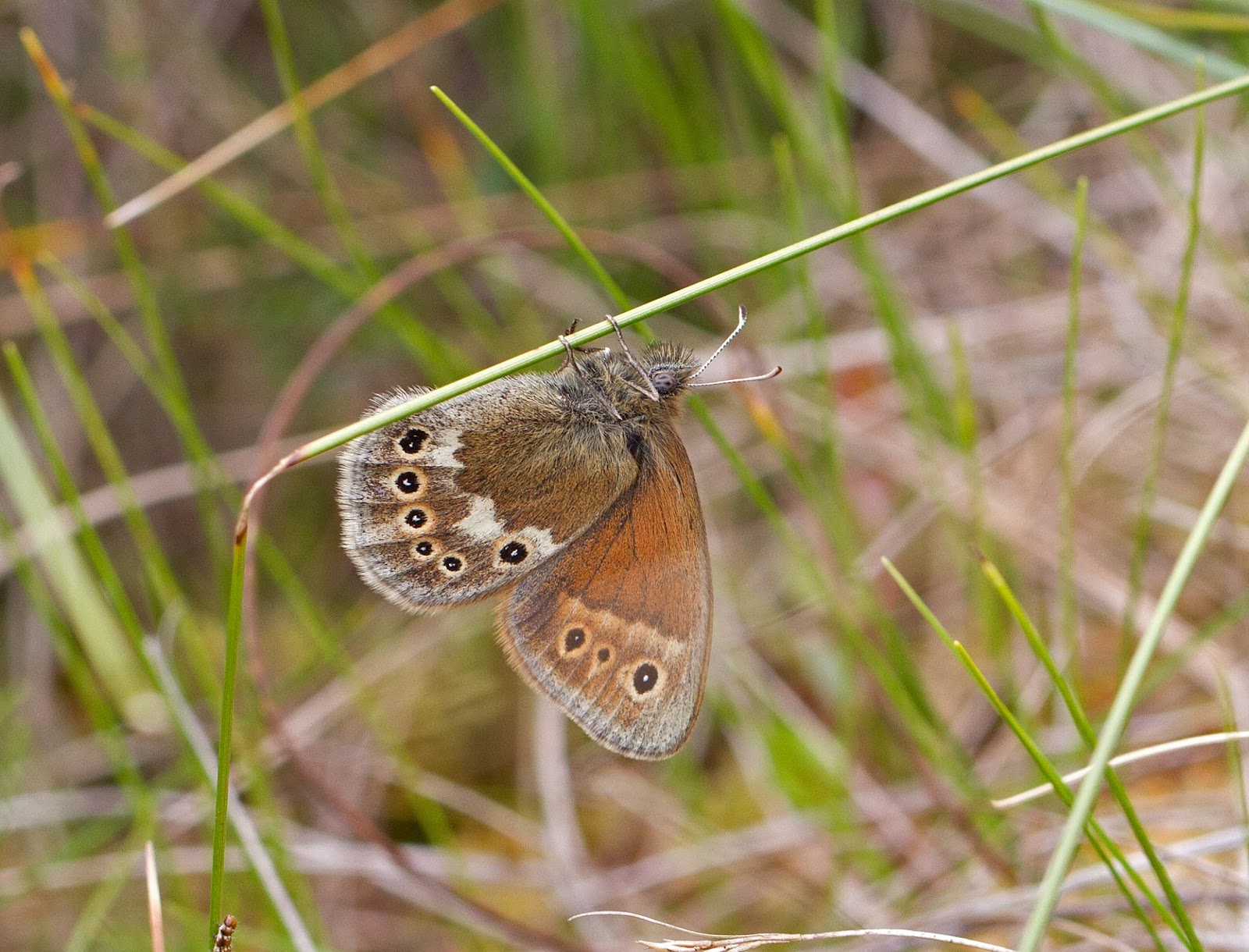
The journey south was broken by an overnight stay in Carlisle but we didn't hang around in the morning, making progress on a fairly quiet M6 towards Meathop Moss, home of our last target - the Large Heath. Luckily it wasn't long before we found a specimen, just off the boardwalk and it flew into the bog. We chased it but neither of us was sure what was underfoot, visions of disappearing up to the neck in stinking soggy peat were In the back of the mind. However, we followed it and managed some records of a fairly tatty specimen - but it was number 56 in the bag and we remained safe.

My first Large Heath -  a bit tatty but who cares!

As the morning progressed the sun started to have an effect through the thin cloud and more butterflies were on the wing but of course with the added heat they were more active. When they settled they preferred to be in the clumps of grass rather than out on a perch and it was nigh impossible to isolate the subject from the background.


Meathop Moss is a wonderful place and I could have spent hours photographing a host of material, as it was I recorded Sundew, Bog Asphodel and Cotton Grass.

Bog Asphodel


Hare's Tail Cottongrass, Eriophorum vaginatum  - food plant of the Large Heath


Thriving here.
 
This one has Greenfly - a case of the biter bit!


The boardwalk.


I am sure I could spend a whole day at Meathop but by now it was dawning on us that we were not far from the Lake District and the possibility of gaining our fourth life tick butterfly - the Mountain Ringlet. So without further ado we headed back north towards Keswick and Derwent Water.


Wednesday, 8 July 2015

Black Guillemots

Our recce of Oban Harbour was so close to being a disaster, luckily, sharp eyed Martin tracked a bird that flew from the CalMac ferry terminal and landed on the Corran Esplanade, just in front of the Cathedral. So hot foot back to the car and a drive round to try to locate the birds. Parking was a tad awkward so Martin stayed with the car whilst I looked over the sea wall. Sure enough about half a dozen birds in the water, I turned to Martin to give the thumbs up and one landed on the wall just in front of me. These birds aren't fazed by humans and they just get on with life, ignoring the onlookers, behaving like mini penguins.

The Black Guillemot has been high on my photo list for some time, I am of an age where the word "cool" is not usually in my vocabulary. However, on this occasion, I agree that this bird is definitely cool, both its local name "Tystie" and its scientific name, Cepphus grylle are cool too.


At one point in the proceedings Martin tapped me on the shoulder and pointed down the jetty on which we were standing. One of the birds had landed just below us, right on the limit of my minimum focus distance. Looking into the eye of this bird you can almost make out two photographers!


So the holiday was starting to be a success, two life ticks and several year ticks, we were on a roll, we just had to go up Ben Lawers for a Mountain Ringlet. A couple of hours later we were parked by the dam on Ben Lawers, a fairly stiff cool breeze from a northerly direction meant nothing was flying but at least the sun was shining. After a brief search we dropped back down to the car park where the visitor centre used to be. We walked up the Edramucky Trail to the fenced enclosure, in an area just to the right of the gate Small Heaths were about but precious little else. Finally  late in the afternoon, I had a glimpse of a Mountain Ringlet but it did the vanishing act and I failed to get a shot.

Chequered Skipper

This morning we made the journey from Grantown on Spey to Glasdrum Wood, a National Nature Reserve on the slopes of Beinn Churalain and overlooking Loch Creran. Chequered Skippers had been reported here in the previous week, remarkably late in the season. This butterfly has been at the top of my list for some time having dipped it for the last two years. We just had to give it a go and of course, other butterflies are available.

We stopped off at the Corran ferry to scan for Black Guillemots and Martin's research was proven right as we soon sighted at least half a dozen. One landed on the pier and would have provided an excellent photo opportunity, unfortunately all this activity was on the Ardgour side, the distant shore, so we resolved to make a visit on our way back.

Arriving at Glasdrum we found we were the only people present. The sun was out and the temperatures were rising rapidly so we decided to start on the wayleave, the clearing cut for the power lines that transect the lower part of the reserve. Thirty yards in we found our first and only Chequered Skipper. The photos show that it is well worn and obviously at the end of its shelf life, having had a hard time fending off other skippers and searching for mates. No matter, another life tick and I actually gave a loud cheer.


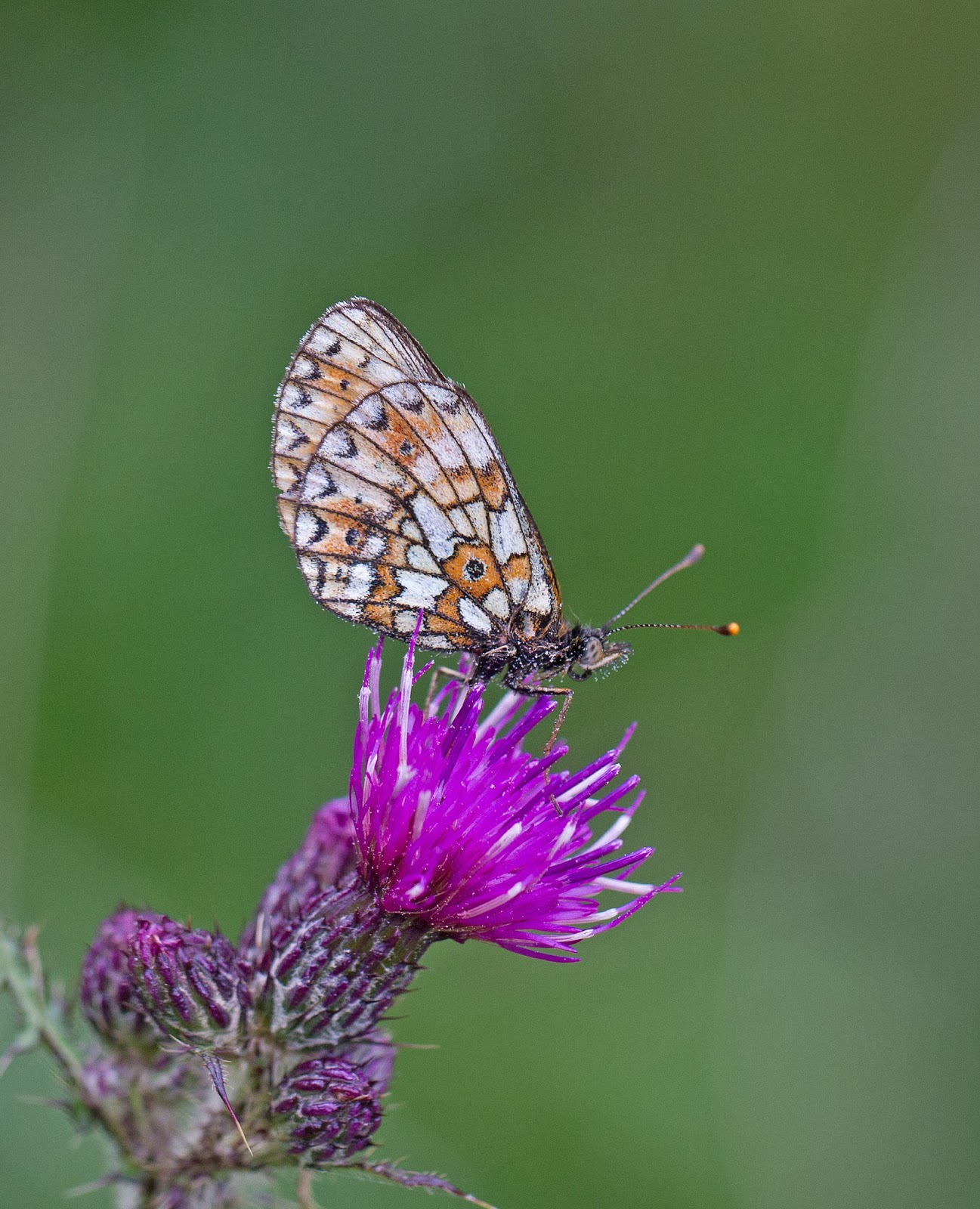
 I was surprised at how boggy the slopes of the reserve were, an ideal site for dragonflies and other creatures that like the wet. Plenty of Small Pearl-bordered Fritillaries were on the wing, looking just as worn as our prized specimen. Golden-ringed Dragonflies were numerous and perched obligingly, far more so than our local specimens that vanish at any approach.


The sun was gaining in strength so we returned to the car park for a brew and a change of plan, rather than a 1000 ft. climb we decided that a recce for Black Guillemots in Oban harbour might pay dividends.

Tuesday, 7 July 2015

Northern Brown Argus

A couple of weeks ago Martin and I had decided that another visit to Scotland was in order, with both birds and butterflies as our targets. Elvis the King Eider in the Ythan estuary was the primary quarry. Martin was keen to get the tick and I wanted some improved shots from those I took in May. Of course, the Law of Sod kicked in and Elvis did a bunk northwards just after we had booked our hotels. So we modified our programme and the final list was a mix of birds and butterflies. My emphasis was on the butterflies - wanting just five to complete my UK mainland list, but Martin was just as keen to get them in the bag.

So early on a fine sunny morning we left our hotel in Berwick upon Tweed and made our way to St. Abb's Head, where there is a reserve set aside for the Northern Brown Argus. On the walk towards the head we were distracted by Ringlets and some strange day flying moths of a species that I had not seen before. In the breeze they proved almost impossible to photograph and I never obtained a satisfactory shot.

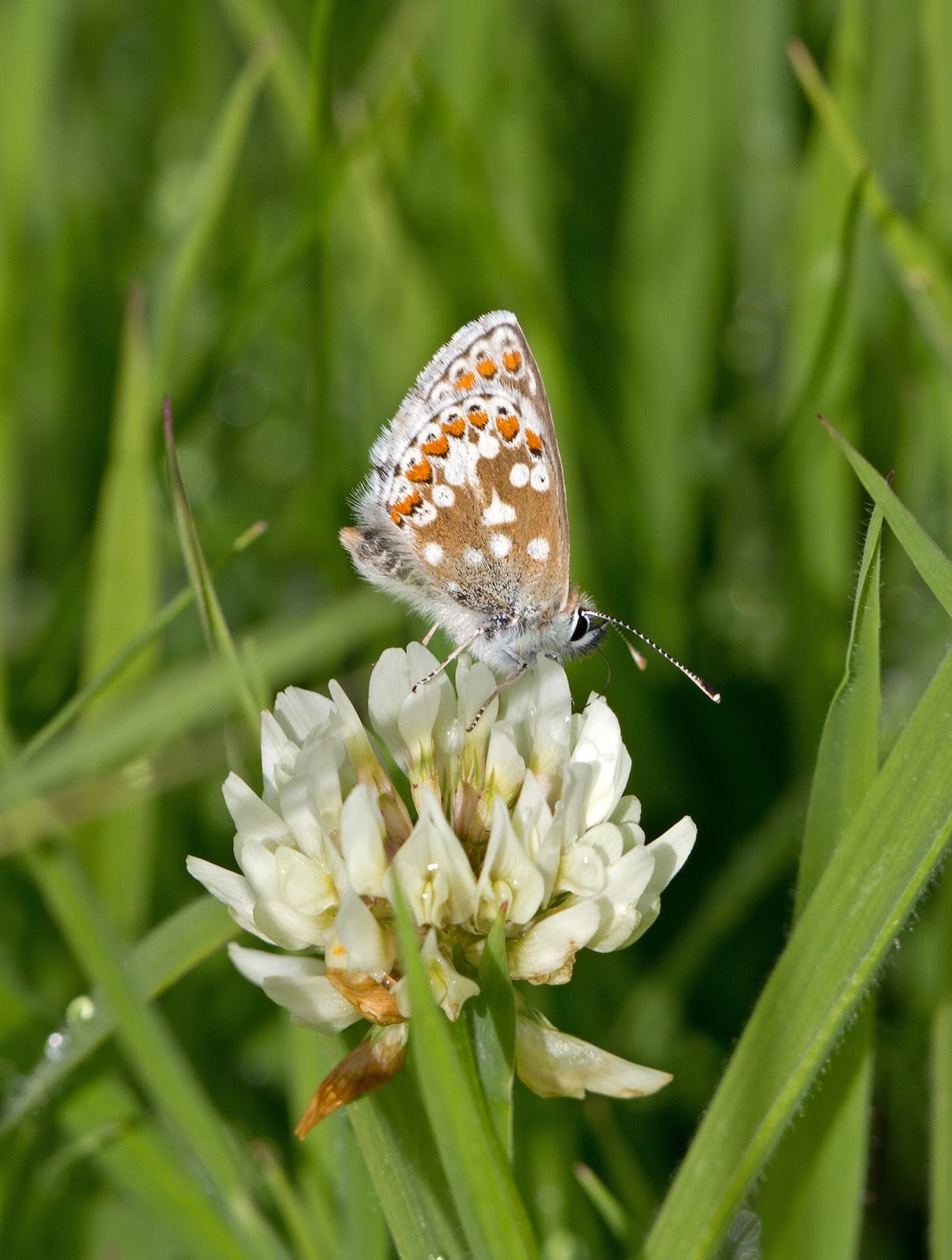
When we reached the NBA reserve we split up so that we could search a larger area. It wasn't long before we found a resting specimen and I was well pleased to record my 54th species of butterfly. I reckon we probably had double figure sightings and having recorded sufficient specimens we decided that we could use the time better at our next venue. Of course on the way back to the car we were seduced by the offerings of "The Old Smiddy", where we had a bacon butty and a cup of tea as we had foregone breakfast in order to maximise our time here. We shared our table with an incredibly tame male Chaffinch who had a few pickings from us.


St. Abbs


We made excellent progress, the Edinburgh City Bypass flew past and we were making good time to Trinafour, a village off the A9 north of Blair Atholl. David Gardiner had told me that Mountain Ringlets can be found in this location, and close to the road. Unfortunately the weather deteriorated and drizzle set in. We searched in vain and found just a few Small Heaths flying. I think we were just a tad early as the season in Scotland has been delayed by prolonged bad weather earlier in the year. Additionally, there have been extensive groundworks here, large new electricity pylons being installed obviously require heavy plant over the area. So we hit the road for our third target of the day, the Osprey nest that Liz and I had visited during May, I was keen to know if there had been any breeding success.

Sure enough, as we arrived we could see the male Osprey was sat in exactly the same place - an old dead tree adjacent to the nest. Encouraged by the female he went off in search of food and amazingly returned in very short order with a Pike. Now we had clear views of both adults and at least one youngster. Unfortunately tempus fugit and we had to press on to our overnight accommodation in Grantown on Spey. Not a bad day - two ticks from a "wanted" list already.


The previous day we had broken the journey up north with a visit to RSPB Dearne Valley - or Old Moor, as it used to be called. Here we had views of the drake American Wigeon, sadly distant and the photographs are not the best. Sitting in the hide with the rain coming down I entertained myself photographing a Green Sandpiper. Later we went in search of the Little Bittern that had been resident for some days, alas a no show and as I sat in the "Bittern Bus Stop", an open shelter overlooking the reedbeds of the reserve, I had an overwhelming desire to nod off.


Thursday, 2 July 2015

Nightjars on the Commons

Last night Martin and I shared a Sussex Common with several Nightjars and a horde of voracious midges. It is quite enthralling, waiting for the sun to go down and to hear the first churring. Unfortunately last night we also had a helicopter fly by, a barking dog and in the distance an outdoor concert  with the obligatory bass thump. Never mind, at around 2145 the first faint sounds were heard. Soon a closer bird flew by and perched for us and then commenced a fairly loud churring session - wonderful!

The photographs were taken in near darkness - for the photographers - Canon 7d Mkii coupled with a Canon 300mm F2.8 and 1.4 extender - hand held. The remarkable thing is that I managed to get any sort of recognisable shot as I had the camera set to ISO 10000 and a shutter speed of 1/30 of a second.


Taken at 21:56!

Being so close afforded the opportunity to record the churring, flight calls and wing clapping that are characteristic of the bird.

Sonogram of the first recording, sorry the blog doesn't run to synchronised sound and vision.


Press play for the audio track


For the Geeks. Olympus LS11 with Sennheiser Me66/K6. Post processing in Audacity. Sonograms in Raven Lite.

This is a second recording of the same bird, this time with a high pass filter applied at 320 Hz, helping to remove some of the ever present aircraft noise. The swatting sounds remain, I am afraid the midges were getting through my defences.