Pages

Wednesday, 18 June 2014

Glanville Fritillary

It is a truth universally acknowledged, that a butterfly enthusiast must be in want of a good psychiatrist. (With apologies to Jane). What normal, sane person would arise early, throw his gear into the car and venture to the southernmost parts of the Isle of Wight in search of a single butterfly?

Well, earlier in the year we had decided that the target number of species of butterfly to be seen this year would be 40 and it isn't a race. As Martin had seen a Glanville Fritillary at Hutchinson's Bank, the only place that would give a reasonable chance for me to catch up was Compton Down near Freshwater on the IOW. I arrived at the Wightlink Terminal in Portsmouth just after 0800, parked up and went for a coffee. As I emerged with a brim-full large latte I was asked "Would you like to go early? - two spare places - hurry up! Have you ever tried to put one of those coffee cup lids back in a hurry whilst starting the car and putting a seat belt on? I duly boarded, squeezed in between several large lorries.

As I arrived on the Island the weather was dull and overcast but approaching Freshwater the sun started to peek through and I was encouraged, just one Glanville with photographic evidence was all I needed. I decided to start my search at Shippard's and walk back towards Compton Chine, firstly on the clifftop walk and then down on the undercliff. As I parked I could see two men in that classic pose of butterfly hunters, slowly walking through the meadow, eyes fixed on the ground. I hurried over to them and politely enquired "Found any Glanvilles?"  The reply - "Wot mate?"  I asked again if they had found any butterflies. The reply - "Nah mate, we're looking for drain covers". The moral of the story - never assume anything. So I commenced my search along the clifftop, as always, I was distracted, this time by a magnificent stand of Bee orchids - hundreds of them, some of the tallest specimens I have seen but just going over. As I lay in the grass getting an orchid level shot I was aware of a weak fluttering object close by. "Blow me!" I said, "Glanville!" Sure enough a weak, well worn specimen which I duly captured as it hid deep in the grass, I managed to get a glimpse of the underwing and capture it with the camera - don't want any doubters claiming it to be any other form of fritillary.


The weak sunshine disappeared and for the next four hours I trudged up and down the cliff path and performed as a mountain goat in the extensive landslips of the undercliff, distracted only by an odd green beetle and a curious black and white bee.

Subsequent research indicates that the beetle is the Thick Legged Flower Beetle, Oedemera nobilis.


And the bee is the Ashy mining bee, Andrena cineraria.


Finally the sun came out and I was rewarded with a Humming Bird Hawk Moth, nectaring on a large patch of thistles. Accompanying it were a host of Small Tortoiseshells and some bedraggled Painted Ladies. At long last I came across a specimen of Glanville Fritillary that posed for some reasonable shots, another well worn but welcome specimen. In all I found five GF and realised, yet again, that you need to be out in good time to capture fresh subjects. Unfortunately I had delayed my visit by a week as the IOW music festival had got in the way.


On the way back to the car park I was treated to a fresh Clouded Yellow coming off the sea and over the clifftop - I thought that after such a long journey it was bound to nectar immediately - not a bit of it - over the meadow, across the road and on up Compton down with nary a pause. Similarly, a Marbled White made a high speed pass along the cliff edge - no chance of following it without the possibility of disaster.

Then it was time for home, booked on the 1700 ferry from Fishbourne, the end of a great day out. I will be back next year but a tad earlier should the weather conditions allow it.

Shippard's to the east.

Freshwater Bay to the west - much nicer when the sun shines
Much of the undercliff environment affected by the winter rains - new slips everywhere - burying the old.
Ribwort Plantain and Bird's - foot Trefoil will need to re-colonise


Tuesday, 17 June 2014

Heath Fritillaries

There is nothing better than local information when it comes to finding a scarce, even rare, subject. Martin and I had decided to visit East Blean to find a Heath Fritillary. I asked Mike Hook for some help and he came up with the goods. Precise directions to a woody glade somewhere in Blean Woods. Thanks Mike we owe you one.

When we arrived the weather was warm and overcast with just a hint of sunshine and the promise of better conditions on the horizon. As we entered a glade in the woods Martin spied the first specimen. Not sure, but I think our small wager on who discovers our quarry first has led to an improvement in Martin's eyesight. A single specimen perched in the grass and I hadn't got my camera out, slight panic set in as I didn't want to blow the opportunity of capturing such a rarity. Ha! - slowly it dawned on us that they were everywhere, hidden in the grass and Cow Wheat, one careless step could destroy several of Britain's rarest butterflies.


We had arrived in a photographer's nirvana - abundant perfect specimens posing in splendid locations. Martin discovered that if you blew on the open winged butterfly it would obligingly adopt a close winged pose, I hasten to add that when the sun came out and the butterflies livened up a tad this tactic failed abysmally.


Previously Mike had estimated 40 specimens present, well today it was a hundred plus and I reckon two hundred would be nearer the mark as, when we took a walk around the adjacent rides, we found isolated pockets of the population. An abiding memory of this venue is that when the sun shone strongly the butterflies performed a magical dance above the grass, all desperately searching for a mate. Never before have I recorded so many butterflies on a single plant, Martin's maximum was seven and I counted six, which I managed to capture - albeit with dodgy focus.


This is "Ted Heath", whilst I was conducting some judicious "gardening" to improve a shot, Ted obligingly alighted on my index finger and stayed for several minutes whilst I wandered about the woods.


Common Cow Wheat the butterfly's food source.
 No apologies for the huge amount of photographs - the subject was simply stunning. I just hope I have done it justice.


Thursday, 12 June 2014

Out and About

With the good weather continuing we decided that another butterfly outing was in order, so we made our way to Park Corner Heath near Laughton in East Sussex. Martin, who had twice visited this place and never found anything of interest, was slightly pessimistic. I have to say that after my first visit I was totally underwhelmed. The blurb for PCH states that it is a hidden gem with a wide variety of interesting butterflies, animals and plants. Well, one Brimstone and one Speckled Wood doesn't really stack up to wide and interesting. Perhaps we were unlucky or inexperienced but I don't think we will be going back to find out which.

Contrastingly, when we crossed over into Rowland Wood the place was buzzing. Newly emerged damselflies and dragonflies, moths, beetles and flies were about and willing to be captured on pixels.

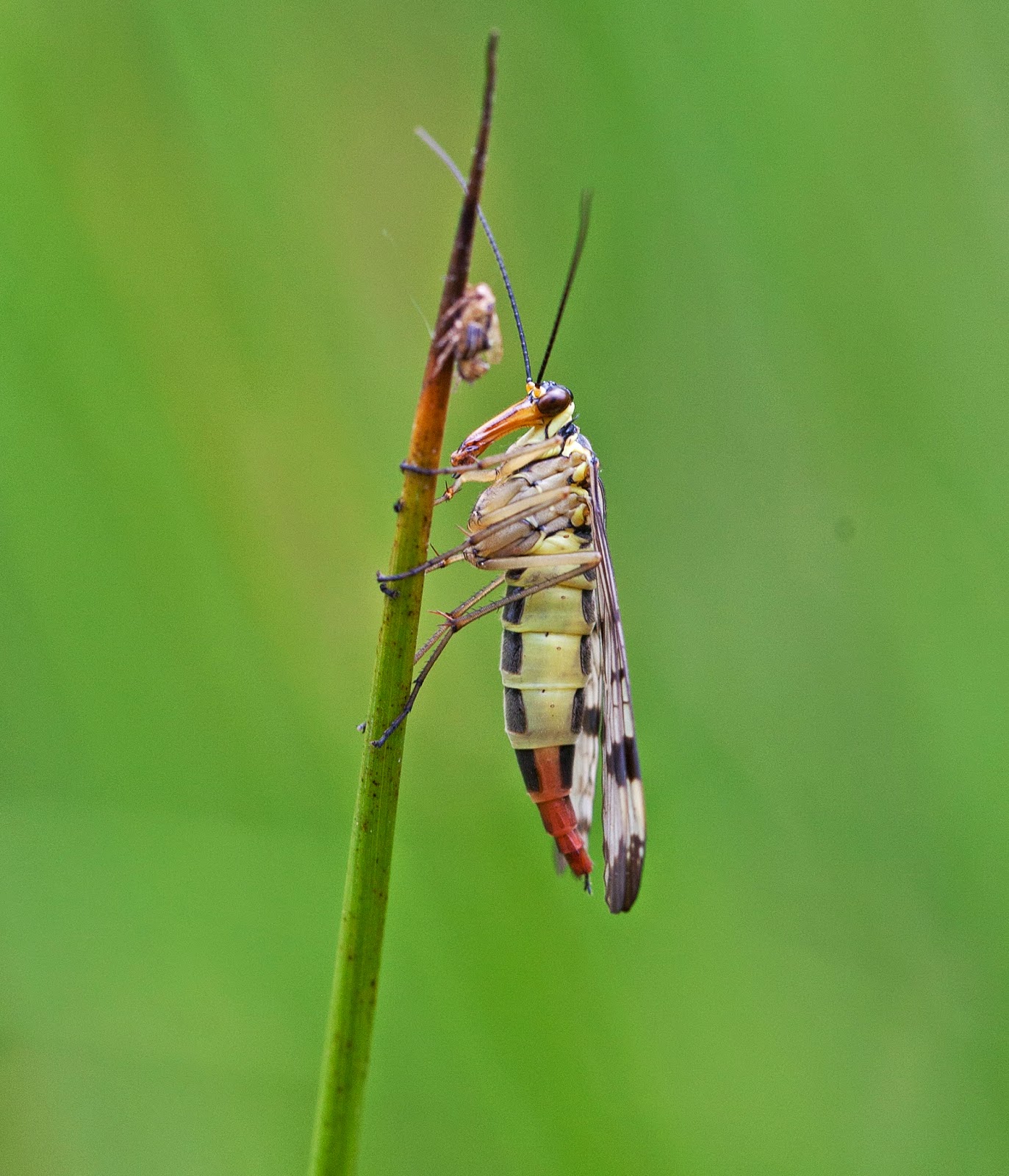
First up was a Common Darter, perched in the trees, striving to get itself into shape for flight, also Emperors were about on the heath but none stopped for us. A smart Mother Shipton moth perched in the long grass was a nice addition. A Scorpion Fly and a  Longhorn Beetle were recorded and on the way back to the car park we were buzzed by a large Brown Hawker. That's what I call "interesting"


Where next? We decided upon Old Lodge - for two reasons, the ponds would have dragonflies present and there would be a chance of a Silver-studded Blue. Sure enough we found a host of damselflies, Broad-bodied Chasers and a pair of Emperors, the male guarding the territory whilst the female oviposited her latest brood into the dark waters of the pool.


Obvious on the water....


....not in the grass.


There wasn't a lot of bird activity but we did hear a Raven in the distance. On the way back to the car park a male Cuckoo stayed a healthy distance in front of me, just flitting from tree to tree. Finally, late in the day, a butterfly, in the form of a Large Skipper posing on the heather. Nice to see that some of the Redstarts have been successful. Great to meet Paul and David in the car park, the long chat we had with them delayed our return home - slightly.


Tuesday, 10 June 2014

Wood White and Silver-studded Blue

My antipodean reader may be forgiven for believing that I have been sent to a penal colony when I say that I spent the morning in Botany Bay. This one is a Forestry Commission wood in leafy Surrey, not a place of correction for those transported overseas. Due to holidays and other commitments I had missed the optimum time for catching up with the Wood Whites that reside there and, as Martin and I have a target of 40 butterfly species this year, I couldn't pass up any chance of a tick.

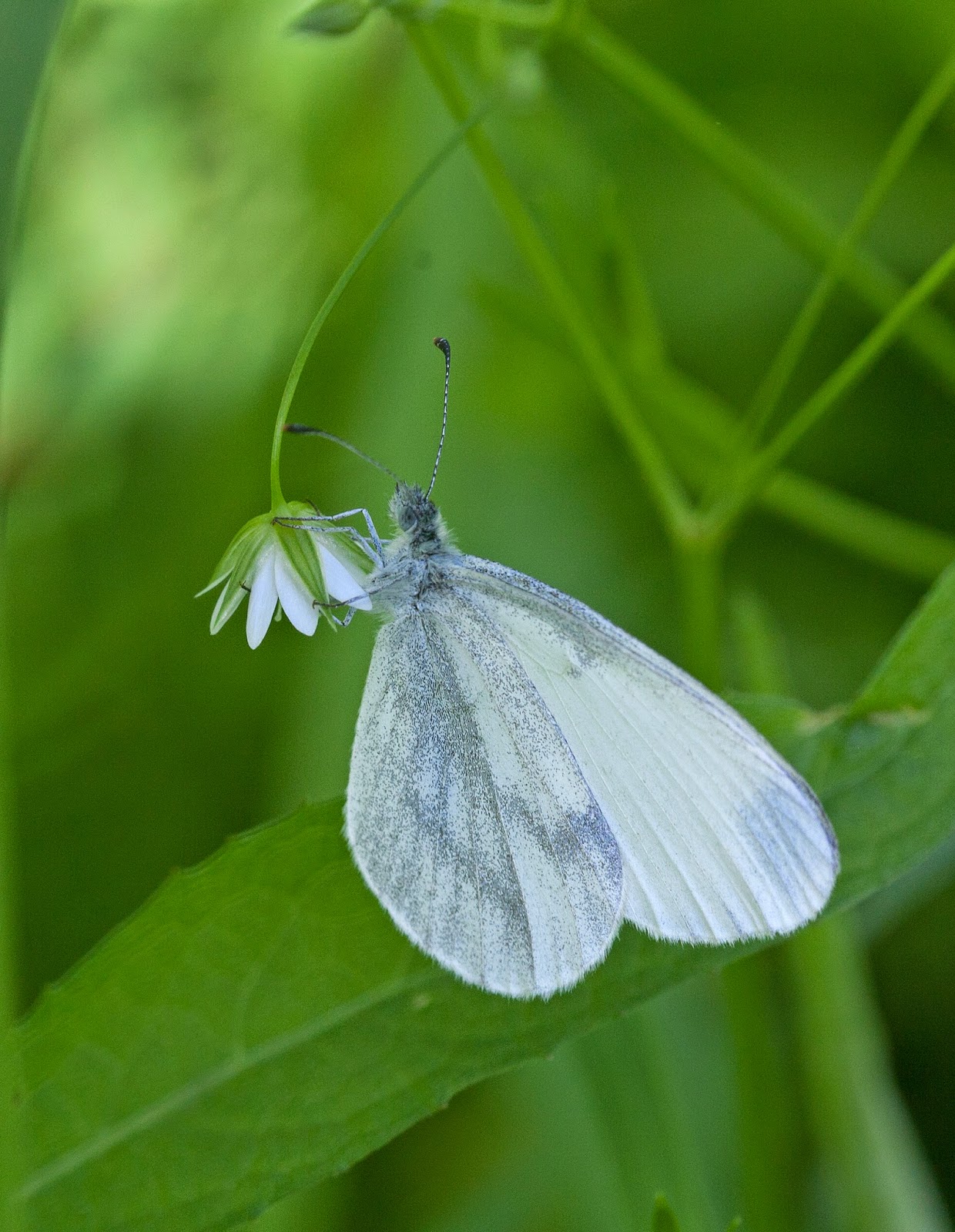
So we arrived about mid morning in glorious sunshine but not much was airborne, in fact we had strolled up the main ride to the triangle and seen just the occasional Speckled Wood. Finally, when I was beginning to doubt that I would see one, up popped a nice clean male specimen. This is a butterfly that will happily pose for the camera, that said, as Martin wryly observed, it only has one pose and it never opens its wings when stationary. So here is the pick of my shots, sorry they are so similar but I was happy to have it in the bag.


Next venue was Iping Common where the Silver-studded Blues have started to emerge. Out on the wide expanse of heath we found one tatty specimen and it was a little time before we found a dozen or more flitting about in the midday sun. Yet again not the best of quality and that means a revisit, obviously when more are on the wing.


On the way back to the car park a fairly large moth flew across our path and crashed into the heather - a Clouded Buff - not a species with which I am familiar but happy to capture it all the same.


Two venues and two species and still a good portion of the day left, this meant we could call into Lord's Piece on the way home to see what dragonflies were about. Straight away we had good views of both Four Spot Chaser and Broad-bodied Chaser plus a host of damselflies. Finally a single specimen of Golden-ringed Dragonfly alighted on the fence and posed, this time Martin was on it and it remained in our vicinity for some time. Final species for the day was a nice looking Downy Emerald, unfortunately this chap didn't hang around for long, just long enough for a reasonable shot.


On the way home we both agreed that it was yet again a cracking day out - that's two on the trot - whatever next?