Back in 2019 I planned to go on the Greenwing's Rhodes Orchid Odyssey and the subsequent Covid pandemic put paid to that. In fact from booking to actually travelling to Rhodes was an interval of 1034 days. The burning question is - "Was it worth the wait?". Well the answer is an emphatic "yes!" I had read previous trip reports and it was likely that I could see around forty species of orchid within six days and so it proved. However, I hasten to add that this was a result of the hard work of the two best tour leaders in the business - Jon Dunn and Yiannis Christofides. I had met Jon previously on the "Orchids of Kent" and I had toured the Alpes Maritime, Pyrenees and Cyprus with Yiannis.
The journey out was tedious but uneventful and having gathered at the airport we were soon on the way to our base for the week, the Ataviros Hotel in Embonas, A comfortable family run hotel with good food and good beer, what more can you ask for? After a quick lunch we just had to scout the agricultural area at the rear of the hotel. Plenty of botany but importantly our first three orchids - Ophrys sicula, Orchis anatolica and some Himantoglossum robertianum, which were past their prime. A good start but the conversations at dinner centred around the untold treasures that could be found on the island.
This year winter in the eastern Mediterranean had lingered and resulted in a late spring. Now, in orchid terms, this is a double edged sword in that during the week we were likely to find some of the early flowering orchids but on the other hand fail to discover some of the later species. However, our leaders were up to snuff, the weather had turned to warm and sunny - spring had sprung and they made a decision to adjust our itinerary so that we could take in the lower lying areas first. Delicate orchids such as Ophrys speculum could rapidly become toast in the steadily increasing temperature. So, our first day found us in the area of Kattavia, amongst beach, sand dune and garrigue environments.
Well of course on tours such as this we never go direct, on the way we made a brief stop and as a result I found my first orchid - Ophrys apollonae, an understated orchid hiding away under the pine trees and a lifer for me.
 |
| Ophrys apollonae |
Finally we reached our destination and the first orchid was the one that was top of the bucket list - King Ferdinand's Orchid, Ophrys regis-fernandii. Sometimes know as the Earwig Orchid for obvious reasons.
 |
| Ophrys regis-fernandii |
 |
| Ophrys regis-fernandii |
 |
| Ophrys regis-fernandii |
Just a few metres away another one that was high on the bucket list, Ophrys cretica ssp beloniae. Nice specimens but nothing compared with the ones we encountered at lunchtime.
 |
| Ophrys cretica ssp. beloniae |
 |
| Ophrys cretica ssp. beloniae |
Ophrys iricolour was an easy spot as I was familiar with it from my Cyprus trip. I know that common names are somewhat frowned upon by the botanists but "Rainbow Orchid" is stretching things a bit far.
 |
| Ophrys iricolour |
 |
| Ophrys iricolour |
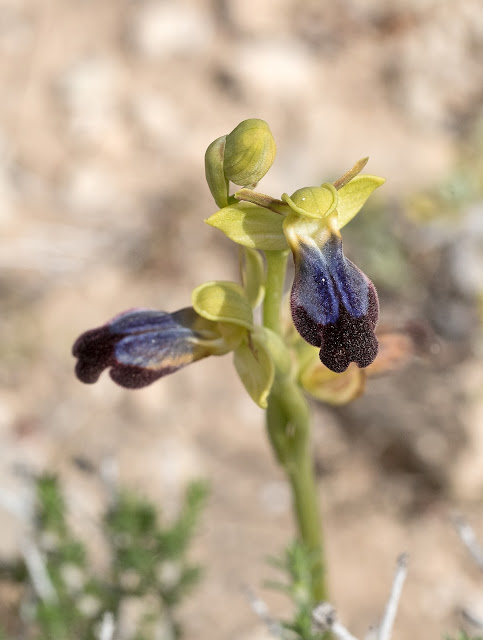 |
| Ophrys iricolour |
A new one for me was Orchis papilionacea, very striking and has a huge variation in colour, every shade of pink-purple to almost white, we saw them everyday and I succumbed to their charms by photographing them daily.
 |
| Orchis papilionacea |
 |
Orchis papilionacea
|
The next site was not too far away but a tad more distant from the beach and slightly more elevated resulting in a change of orchid species. Ophrys speculum, another orchid that I had met before, this time on the Balearics, but these appeared much larger than their Spanish cousins.
 |
| Ophrys speculum |
 |
| Ophrys speculum |
 |
| Ophrys speculum |
 |
| Ophrys speculum |
 |
| Ophrys regis x speculum ? |
With Ophrys regis-fernandii and Ophrys speculum in such numbers and close proximity there just had to be some crosses. This one is obvious but some of the other speculum I photographed showed fernandii characteristics to a lesser degree.
 |
| Ophrys regis x speculum |
A fresh Ophrys calypsus caused some excitement and was duly recorded
 |
| Ophrys calypsus |
 |
| Ophrys calypsus |
 |
| Ophrys calypsus |
 |
| Ophrys calypsus |
Time for a break. We took lunch in the grounds of a small church, it was nice to sit and relax in the shade - but not for long. Ophrys cretica ssp belionae growing in the shade of a wall had thrown up some huge spikes and had remained fresh despite the rising temperatures.
 |
| Ophrys cretica ssp. beloniae |
 |
| Ophrys cretica ssp. beloniae |
 |
| Ophrys cretica ssp. beloniae |
 |
| Ophrys cretica ssp. beloniae |
On some rough ground at the rear of the church we found two more orchids. Serapias carica,
 |
Serapias carica
|
 |
| Serapias carica |
and the Small Horned Bee Orchid, Ophrys cornutula.
 |
| Ophrys cornutula |
 |
| Ophrys cornutula |
On to another very productive hillside which gave me four lifers and I missed another after straying from the group as I am wont to do. No problem - I caught up with Ophrys bombyliflora on several occasions later in the week.
First on the list was Ophrys rhodia .....
 |
| Ophrys rhodia |
 |
| Ophrys rhodia |
....followed by Ophrys sitiaca....
 |
| Ophrys sitiaca |
 |
| Ophrys sitiaca |
 |
| Ophrys sitiaca |
...then Ophrys parvula.....
 |
| Ophrys parvula |
 |
| Ophrys parvula |
... and finally, just one specimen of Ophrys dodekanensis, going over and recorded badly after being told that we would see better specimens later in the tour. However, I like to keep a diary of the day. (That's my excuse)
 |
| Ophrys dodekanensis |
Next up was another lifer - Ophrys ferrum-equinum, named the Horseshoe Orchid for obvious reasons. This was another of the species that we managed to record every day.
 |
| Ophrys ferrum-equinum |
 |
| Ophrys ferrum-equinum |
 |
| Ophrys ferrum-equinum |
Other botany
Other plants on my bucket list included several Rhodians and I was particularly pleased to be able to record, on the first day, both Fritillaria rhodia and Campanula rhodensis,
 |
| Fritillaria rhodia |
 |
| Fritillaria rhodia |
 |
| Campanula rhodensis |
 |
| Campanula rhodensis |
 |
| Botanists at work! |
 |
| Serious botany going on here. |
Just two butterflies captured today a Small Copper, Lycaenas phlaeas
 |
| Small Copper |
and an Eastern Dappled White, Euchloe ausonia
 |
| Eastern Dappled White |
A fairly large beetle in the form of what I believe is an Oil Beetle, Meloe proscarabeus
 |
| Oil Beetle, Meloe proscarabeus? |
What I think is a Flat-backed Millipede, Melaphe vestita ssp vestita
 |
| Flat-backed Millipede |
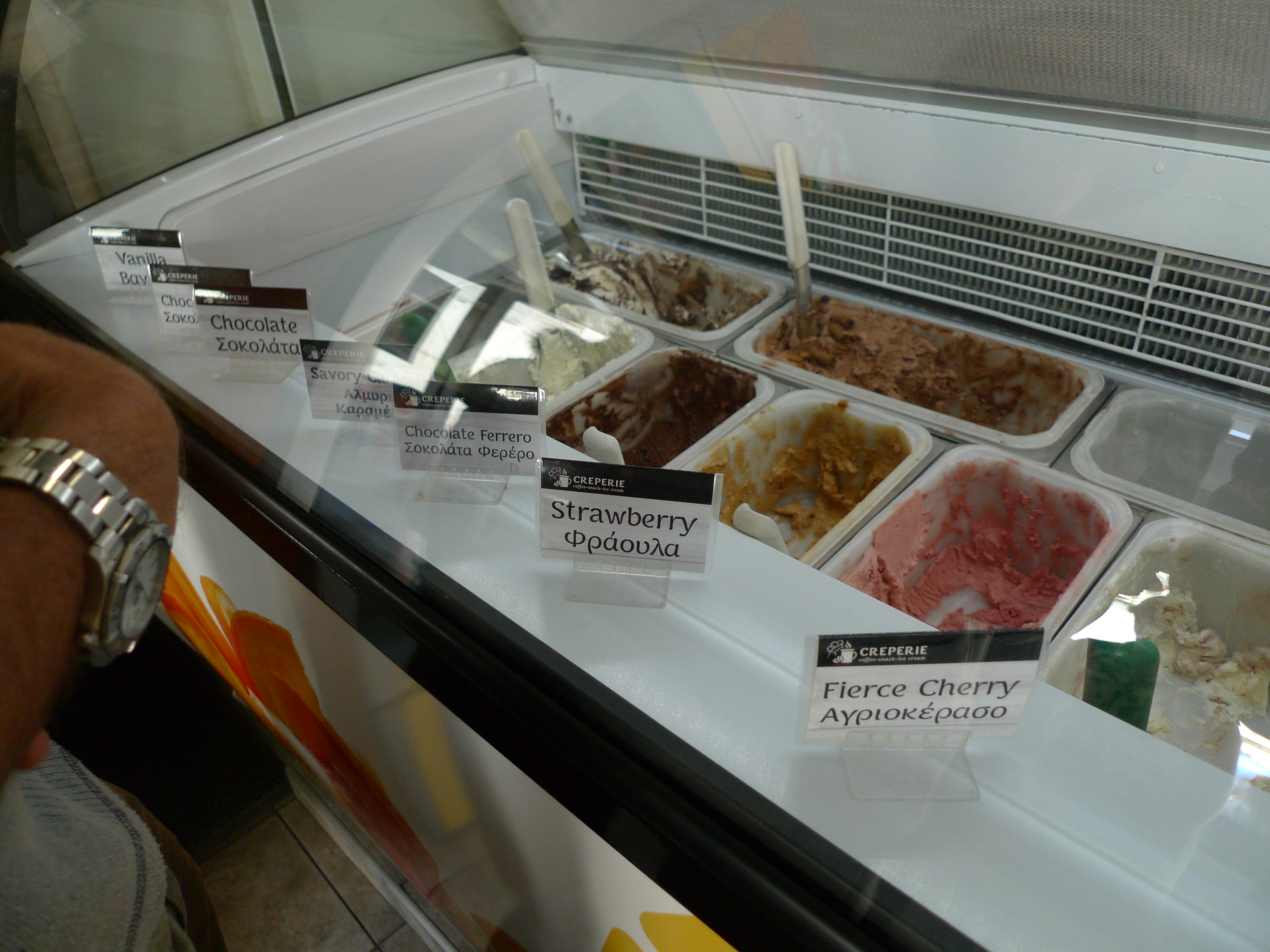
Day one completed, seriously tired and in need of a beer and sustenance but someone in the group had discovered the ice cream emporium.
 |
| Well hidden in downtown Embonas |
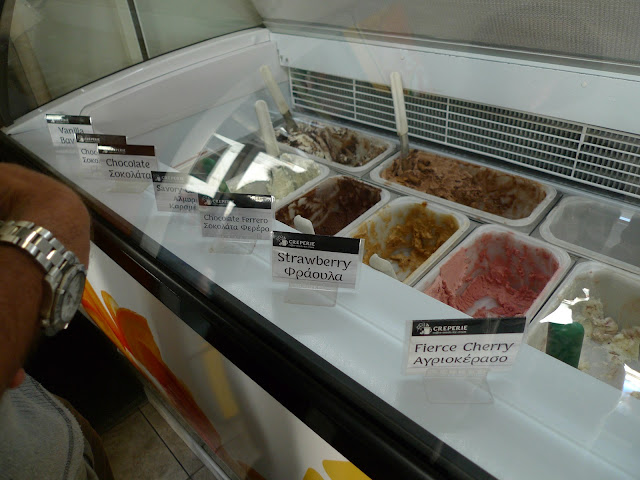 |
| Fierce Cherry??? |